Saturday, 12 January 2019

Woman with Rare Condition Couldn’t Hear Male Voices

Say what? Sudden hearing loss in a woman in China was unexpectedly selective.
Credit: Shutterstock
A woman in China suddenly developed an unusual condition that made her unable to hear male voices. And while that might seem enviable to some, the hearing loss could carry serious medical repercussions.

The woman, who is identified only by the surname Chen, visited a hospital after waking up one morning and being unable to hear her boyfriend's voice, Newsweek reported yesterday (Jan. 10). Chen also told doctors that the night before, she experienced ringing in her ears (a condition known as tinnitus) followed by vomiting.

At the hospital, Chen was treated by Dr. Lin Xiaoqing — a woman — who noted that while Chen was able to hear Xiaoqing's voice, she couldn't hear the voice of a nearby male patient "at all," according to Newsweek. Xiaoqing diagnosed Chen with reverse-slope hearing loss, a rare type of low-frequency hearing loss that likely impaired her ability to hear deep male voices.

Reverse-slope hearing loss (RSHL) gets its name from the shape it produces in visualizations of hearing tests — a slope that is a mirror image of the incline produced by high-frequency hearing loss, according to audiology clinic Audiology HEARS, P.C., in Cumming, Georgia. It affects an estimated 3,000 people in the U.S. and Canada — for every 12,000 people with hearing loss, only one individual has RSHL, the audiology clinic reported.

Humans detect sounds through the vibration of tiny hairs inside the ears, and over time (or because of genetics, injury or drug use) those hairs can become brittle and prone to breakage, said Dr. Michelle Kraskin, an audiologist and the assistant director of hearing and speech for Weill Cornell Medical Center at New York-Presbyterian Hospital in New York City. Kraskin wasn't involved in Chen's case.

The hairs that conduct high-frequency sounds are more delicate and because of this, they're the ones that tend to die first, Kraskin told Live Science. This explains why hearing loss more often affects our ability to hear higher-pitched sounds than lower-pitched ones, she said.

Loss of hearing of lower-pitched sounds (which is what Chen experienced) is also less common because the bass-processing portion of the cochlea — a snail-shaped structure deep in the inner ear — is very well protected, said Jackie Clark, a clinical professor with the School of Behavioral and Brain Sciences at the University of Texas at Dallas, who also wasn't involved with Chen's case.

Causes of the sudden onset of RSHL can include blood vessel problems or trauma, Clark told Live Science. Autoimmune disorders that affect the inner ear — which are thought to occur in about 1 percent of the U.S. population — may also be a cause of RSHL, Clark said. Indeed, autoimmune conditions in the inner ear can cause balance problems that may lead to vomiting — a symptom that Chen described to her doctor, Clark noted.

Though it might be amusing to imagine a world in which male voices are nonexistent, hearing loss is no laughing matter, Clark said. People who experience sudden and unexplained hearing loss should see a specialist as soon as possible.

The good news is that when RSHL is detected quickly, chances are good that the hearing loss can be reversed, Kraskin said.

"Most studies have shown that if you catch it within 48 hours, you have the best chance for recovery," she said. Treatment can involve high doses of steroids, but sometimes the condition goes away without any treatment whatsoever, she added.

In Chen's case, her doctor said that stress from working late and losing sleep caused Chen's low-frequency hearing decline, adding that rest would soon fully restore the woman's hearing, Newsweek reported.

10 Amazing Things We Learned About Humans in 2018

Discoveries about humans in 2018

The human body is amazingly complex, which is why, even in this day and age, we continue to learn new things about ourselves. From a newfound organ to bacteria in our brains, here are 10 things we learned about us in 2018.


Meet your "interstitium"

With all that's known about human anatomy, you'd hardly expect doctors to discover a new organ these days. But in March this year, researchers in New York and Philadelphia said they did just that. Called the "interstitium," the so-called new organ is a network of fluid-filled spaces in tissue. The researchers discovered this network in connective tissues all over the body, including below the skin's surface; lining the digestive tract, lungs and urinary systems; and surrounding muscles. 

It seems that these fluid-filled spaces may have been missed for decades because they don't show up on standard microscopic slides. For now, this network is an unofficial organ, since more research and discussions are needed before scientists would officially bestow such a distinction. But the findings raise many questions, including whether this part of the body could play a role in driving diseases.


Dads can pass on mitochondrial DNA

It's long been thought that people inherit mitochondrial DNA — genetic material found inside cells' mitochondria — exclusively from their mothers. But in November, researchers published a provocative study that found that, in rare cases, dads can pass on mitochondrial DNA, too. The study found evidence that 17 people from three different families appeared to inherit mitochondrial DNA from both their mother and their father. The findings have already been confirmed by two additional laboratories, but more research replicating the findings from outside groups are still needed, experts said. If proved true, the findings would change our understanding of mitochondrial DNA inheritance, and may lead to new ways of preventing the transmission of mitochondrial diseases, the authors said.


Bacteria in the brain?

Scientists have always thought of the brain as a "sterile" site, meaning it's normally free of bacteria and other germs. But in November, researchers presented a study at a scientific meeting that found preliminary evidence of microbes living harmlessly in people's brains. The researchers took high-resolution images of slices of postmortem human brain tissue, which showed bacteria in the tissue. Critically, there were no signs of brain disease, suggesting the possibility that people have a "microbiome" in their brain, similar to the one in the human gut. However, additional work is needed to rule out the possibility that the brain samples were somehow contaminated after death, although the research conducted so far does not suggest contamination.


Microplastics in your poop

So-called microplastics, or tiny particles of plastic, have been found in everything from ocean and tap water to sea creatures and soil. But in October, researchers from Austria found microplastics in stool samples from people around the world. The study involved eight healthy people living in eight different countries, and each stool sample submitted contained the insidious plastic particles Still, a larger study will be needed to confirm the findings, and to investigate the lingering question: Do these plastic particles have an effect on human health?


Wrinkles linked to heart disease

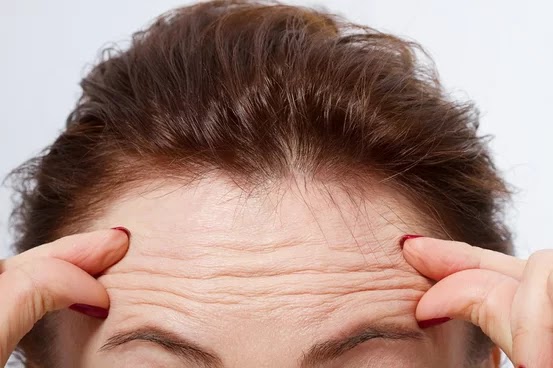
Wrinkles may be more than just a sign of aging — they could signal heart-disease risk. In August, researchers from France presented a study that found that people with numerous, deep forehead wrinkles were more likely to die from heart disease, compared with people of a similar age without forehead wrinkles. The exact reason for the link is unknown, but some factors that lead to premature aging of the skin may also contribute to aging of the arteries.

If the findings are confirmed with additional research, looking at forehead wrinkles could be an easy way to help identify people at high risk for heart disease, or at least raise a "red flag" about their risk. However, it wouldn't take the place of assessing people for classic risk factors, such as high blood pressure and cholesterol levels, the researchers said.


You may remember 10,000 faces

The number of faces you remember is probably more than you can count. But a new study attempted to quantify how many faces people have stored in their memories. The number varied depending on the person, but it was 5,000 on average, and up to 10,000 for some people. The researchers examined people's facial memory by showing them photos of people they knew personally, as well as famous people. Participants didn't have to put a name to the face, but only had to say whether they recognized it. The researchers noted that their study did not find a limit to the number of faces people can remember.


These genes may help you dream

Why we dream is still a mystery, but scientists may be a little closer to understanding how we dream. In August, researchers in Japan found that, in animal models, two genes appeared to be essential for the stage of sleep called rapid eye movement (REM), when dreams occur. The researchers used CRISPR technology to knock out these genes, called Chrm 1 and Chrm 3, in mice; they found that mice missing both of these genes did not experience REM sleep. The findings still need to be confirmed in people; but a better understanding of how genes control sleep could lead to the development of new treatments for certain sleep and psychiatric disorders, the researchers said.


Your gut bacteria produce electricity

Your gut bacteria can do more than you think: A study published in September found that certain bacteria found in foods and in our guts can produce electricity. For example, the study found that the bacteria Listeria monocytogenes, which people sometimes consume and can cause a foodborne illness, gave off electrons that could create an electrical current. Bacteria may have this capability as a "backup system" to generate energy under certain conditions, the researchers said. Although it was known that bacteria in other environments, such as those at the bottom of lakes, could generate electricity, scientists didn't know that bacteria in our guts could do the same.


Friends think alike

If you want to know who your real friends are…get them in a brain scanner? A study published in January found that close friends have similar brain activity in response to certain stimuli, such as random video clips. Indeed, when participants had their brains scanned while watching unfamiliar video clips, the researchers could accurately predict whether people were friends based on their brain activity. Close friends had similar reactions in brain regions tied to emotion, attention and high-level reasoning, the researchers found. Additional studies should examine whether people choose friends that think like them, or whether friends can shape the way you think


Selfies distort your appearance

For selfie lovers, there's some bad news: Selfies really do distort the appearance of your face. A study published in March found that selfies taken 12 inches away from the face make the nose look about 30 percent larger than it really is. In contrast, photos taken from 5 feet away did not distort facial features. The findings are based on a mathematical model the researchers created to examine the distortive effects of photos taken at various angles and distances from the face. The researchers said that they want people to be aware that not everything is how it seems in a selfie.


10 Things You Don't Know About You

 All About You

The human body is a great, sweaty, fluid-filled machine, moving and mixing chemicals with precision and coordination, making everything from memories to mucus. Here we explore some of the complex, beautiful or just plain gross mysteries of how you function.


Your Skin Has Four Colors
All skin, without coloring, would appear creamy white. Near-surface blood vessels add a blush of red. A yellow pigment also tints the canvas. Lastly, sepia-toned melanin, created in response to ultraviolet rays, appears black in large amounts. These four hues mix in different proportions to create the skin colors of all the peoples of Earth.


The World Laughs With You
Just as watching someone yawn can induce the behavior in yourself, recent evidence suggests that laughter is a social cue for mimicry. Hearing a laugh actually stimulates the brain region associated with facial movements. Mimicry plays an important role in social interaction. Cues like sneezing, laughing, crying and yawning may be ways of creating strong social bonds within a group.


Cell Hairs Move Mucus

Most cells in our bodies sport hair-like organelles called cilia that help out with a variety of functions, from digestion to hearing. In the nose, cilia help to drain mucus from the nasal cavity down to the throat. Cold weather slows down the draining process, causing a mucus backup that can leave you with snotty sleeves. Swollen nasal membranes or condensation can also cause a stuffed schnozzle.


Big Brains Cause Cramped Mouths

Evolution isn't perfect. If it were, we might have wings instead of wisdom teeth. Sometimes useless features stick around in a species simply because they're not doing much harm. But wisdom teeth weren't always a cash crop for oral surgeons. Long ago, they served as a useful third set of meat-mashing molars. But as our brains grew our jawbone structure changed, leaving us with expensively overcrowded mouths.


Puberty Reshapes Brain Structure, Makes for Missed Curfews

We know that hormone-fueled changes in the body are necessary to encourage growth and ready the body for reproduction. But why is adolescence so emotionally unpleasant? Hormones like testosterone actually influence the development of neurons in the brain, and the changes made to brain structure have many behavioral consequences. Expect emotional awkwardness, apathy and poor decision-making skills as regions in the frontal cortex mature.


Thousands of Eggs Unused by Ovaries

When a woman reaches her late 40s or early 50s, the monthly menstrual cycle that controls her hormone levels and readies ova for insemination ceases. Her ovaries have been producing less and less estrogen, inciting physical and emotional changes across her body. Her underdeveloped egg follicles begin to fail to release ova as regularly as before. The average adolescent girl has 34,000 underdeveloped egg follicles, although only 350 or so mature during her life (at the rate of about one per month). The unused egg follicles then deteriorate. With no potential pregnancy on the horizon, the brain can stop managing the release of ova.


Much of a Meal is Food For Thought

Though it makes up only 2 percent of our total body weight, the brain demands 20 percent of the body's oxygen and calories. To keep our noggin well-stocked with resources, three major cerebral arteries are constantly pumping in oxygen. A blockage or break in one of them starves brain cells of the energy they require to function, impairing the functions controlled by that region. This is a stroke.


Bones Break (Down) to Balance Minerals

In addition to supporting the bag of organs and muscles that is our body, bones help regulate our calcium levels. Bones contain both phosphorus and calcium, the latter of which is needed by muscles and nerves. If the element is in short supply, certain hormones will cause bones to break down�upping calcium levels in the body�until the appropriate extracellular concentration is reached.


Body Position Affects Your Memory

Can't remember your anniversary, hubby? Try getting down on one knee. Memories are highly embodied in our senses. A scent or sound may evoke a distant episode from one's childhood. The connections can be obvious (a bicycle bell makes you remember your old paper route) or inscrutable. A recent study helps decipher some of this embodiment. An article in the January 2007 issue of Cognition reports that episodes from your past are remembered faster and better while in a body position similar to the pose struck during the event.


Your Stomach Secretes Corrosive Acid

There's one dangerous liquid no airport security can confiscate from you: It's in your gut. Your stomach cells secrete hydrochloric acid, a corrosive compound used to treat metals in the industrial world. It can pickle steel, but mucous lining the stomach wall keeps this poisonous liquid safely in the digestive system, breaking down lunch.

AI Can Now Decode Words Directly from Brain Waves

Neuroscientists are teaching computers to read words straight out of people's brains.

Kelly Servick, writing for Science, reported this week on three papers posted to the preprint server bioRxiv in which three different teams of researchers demonstrated that they could decode speech from recordings of neurons firing. In each study, electrodes placed directly on the brain recorded neural activity while brain-surgery patients listened to speech or read words out loud. Then, researchers tried to figure out what the patients were hearing or saying. In each case, researchers were able to convert the brain's electrical activity into at least somewhat-intelligible sound files.

The first paper, posted to bioRxiv on Oct. 10, 2018, describes an experiment in which researchers played recordings of speech to patients with epilepsy who were in the middle of brain surgery. (The neural recordings taken in the experiment had to be very detailed to be interpreted. And that level of detail is available only during the rare circumstances when a brain is exposed to the air and electrodes are placed on it directly, such as in brain surgery.)

As the patients listened to the sound files, the researchers recorded neurons firing in the parts of the patients' brains that process sound. The scientists tried a number of different methods for turning that neuronal firing data into speech and found that "deep learning" — in which a computer tries to solve a problem more or less unsupervised — worked best. When they played the results through a vocoder, which synthesizes human voices, for a group of 11 listeners, those individuals were able to correctly interpret the words 75 percent of the time.

You can listen to audio from this experiment here.

The second paper, posted Nov. 27, 2018, relied on neural recordings from people undergoing surgery to remove brain tumors. As the patients read single-syllable words out loud, the researchers recorded both the sounds coming out of the participants' mouths and the neurons firing in the speech-producing regions of their brains. Instead of training computers deeply on each patient, these researchers taught an artificial neural network to convert the neural recordings into audio, showing that the results were at least reasonably intelligible and similar to the recordings made by the microphones. (The audio from this experiment is here but has to be downloaded as a zip file.)

The third paper, posted Aug. 9, 2018, relied on recording the part of the brain that converts specific words that a person decides to speak into muscle movements. While no recording from this experiment is available online, the researchers reported that they were able to reconstruct entire sentences (also recorded during brain surgery on patients with epilepsy) and that people who listened to the sentences were able to correctly interpret them on a multiple choice test (out of 10 choices) 83 percent of the time. That experiment's method relied on identifying the patterns involved in producing individual syllables, rather than whole words.

The goal in all of these experiments is to one day make it possible for people who've lost the ability to speak (due to amyotrophic lateral sclerosis or similar conditions) to speak through a computer-to-brain interface. However, the science for that application isn't there yet.

Interpreting the neural patterns of a person just imagining speech is more complicated than interpreting the patterns of someone listening to or producing speech, Science reported. (However, the authors of the second paper said that interpreting the brain activity of someone imagining speech may be possible.)

It's also important to keep in mind that these are small studies. The first paper relied on data taken from just five patients, while the second looked at six patients and the third only three. And none of the neural recordings lasted more than an hour.

Still, the science is moving forward, and artificial-speech devices hooked up directly to the brain seem like a real possibility at some point down the road.